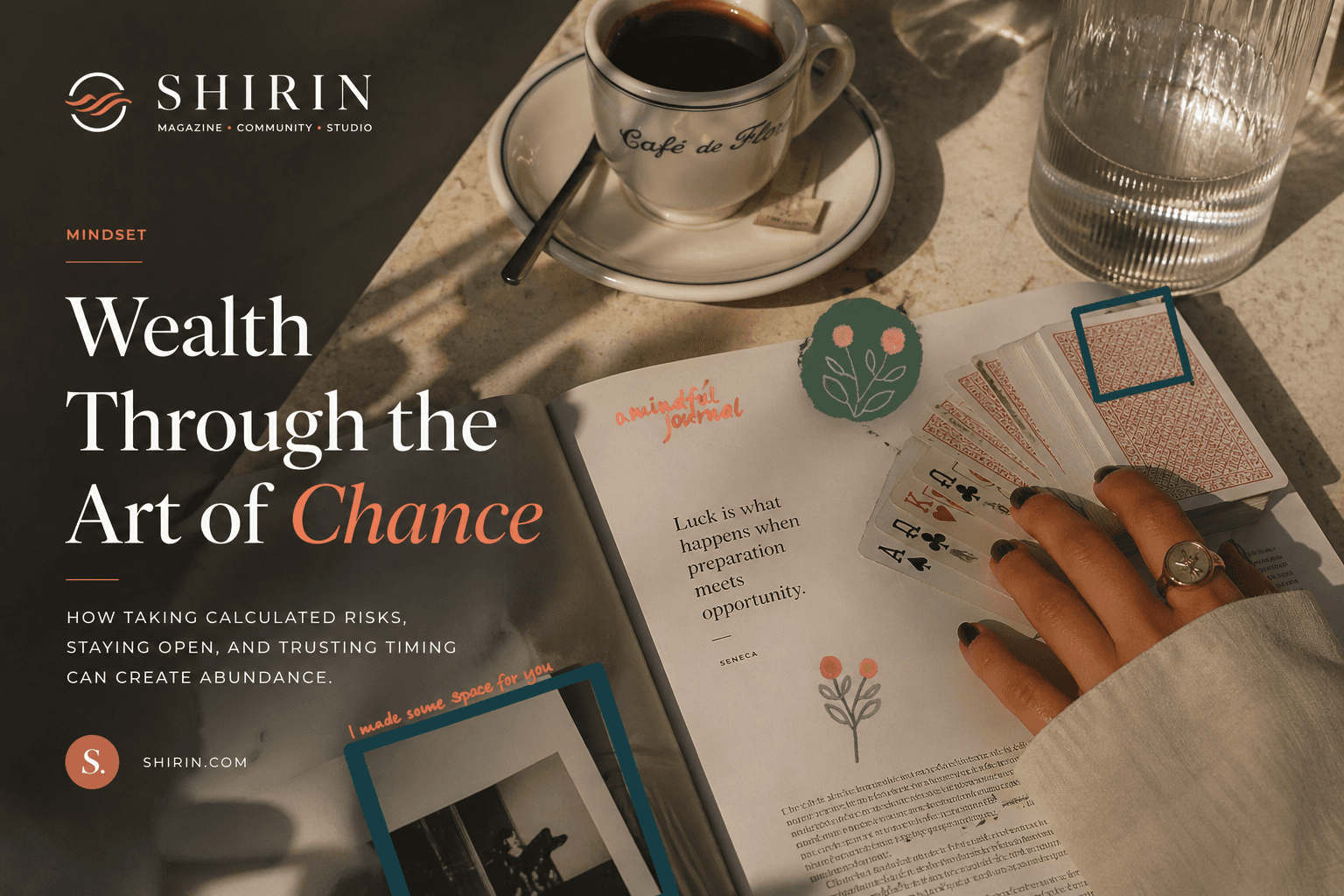
We live in a culture obsessed with the mythology of the self-made. The bootstrapped entrepreneur. The person who woke up at 5am, said no to avocado toast, and compounded their way to millions. The narrative is tidy: work hard, make smart decisions, and the wealth will follow.
But there is something we rarely talk about in these stories — the role of chance.
The Serendipity Effect
Economists and psychologists have spent decades studying what actually differentiates the wealthy from the not-wealthy. The findings are, to put it mildly, humbling. Luck — timing, geography, the family you were born into, the person you happened to sit next to on a flight — plays a far larger role than most success stories acknowledge.
This is not to say that effort and skill don't matter. They do, enormously. But they are not sufficient on their own, and pretending otherwise does something dangerous: it flattens the complexity of financial outcomes into a morality tale where the wealthy are virtuous and the rest simply didn't try hard enough.
Survivorship Bias: The Stories We Don't Hear
Here is a thought experiment. You walk into a room of a thousand people who all started identical businesses ten years ago, with identical skills, identical work ethic, identical capital. Due to random market fluctuations, timing, and chance events, a handful of them became wildly successful. The others didn't.
We write books about the handful. We put them on podcast covers. We study their morning routines.
We never ask the others what they did differently — because the answer, in many cases, is: nothing.
This is survivorship bias. We see the survivors and assume their success is entirely attributable to their choices. We don't see the graveyard of people who made identical choices and simply didn't land on the right side of probability.
What We Can Actually Control: Recognizing the Opening
None of this means we should become passive. Quite the opposite. The research suggests that what we can cultivate is a heightened sensitivity to opportunity — what some researchers call "prepared mind" — so that when lucky circumstances do arise, we are positioned to recognize and act on them.
This looks like:
- Staying curious: exposing yourself to more domains, more people, more ideas
- Building optionality: making choices that keep future doors open rather than slamming them shut
- Managing downside: protecting yourself from catastrophic losses so that a run of bad luck doesn't end the game entirely
- Showing up consistently: not because consistency guarantees success, but because the more times you're at the table, the more chances you have to catch a fortunate wave
A Different Kind of Financial Humility
What would it look like to carry wealth lightly — to enjoy it, build it, share it — without turning it into a story about personal virtue? And what would it look like to speak about financial struggle without shame, knowing that much of the terrain is shaped by forces outside individual control?
I think it would look like honesty. Like a refusal to reduce complex outcomes to simple narratives. Like gratitude for what luck has given us, and generosity toward those it has not.
The art of chance is not about giving up. It is about seeing clearly — and building a life that is resilient to uncertainty, open to serendipity, and rooted in something more honest than the myth of the self-made.
GirlsInvest Finance Pack
Free templates, trackers, and guides from the Finance series. Download and keep.
ZIP · 14.5 MB